Hidden ingredients in ultra-processed foods are quietly reshaping the health of millions of Americans. You’re standing in the grocery aisle, flipping a box over to read the back. The ingredient list stretches on — maltodextrin, sodium stearoyl lactylate, carrageenan, disodium inosinate. Sound familiar? In 2026, more consumers than ever are learning to decode food labels, and what they’re finding is alarming.
Ultra-processed food (UPF) consumption is under more scrutiny than ever. A 2026 investigation revealed that over 111 substances of unknown safety have been added to U.S. foods and supplements without notifying the FDA. Meanwhile, consumer research shows that the share of shoppers actively avoiding hidden ingredients in UPF products has jumped from 30% in 2020 to an estimated 60% in 2026. The ingredient label has become a battleground — and knowing how to read it is one of the most powerful health tools you have.

What Is an Ultra-Processed Food?
The most widely used system to identify ultra-processed foods is the NOVA Classification, developed at the University of São Paulo. NOVA groups foods into four categories based on how much processing they’ve undergone:
- Group 1 – Unprocessed or minimally processed foods: Fresh fruits, vegetables, plain meat, eggs, milk.
- Group 2 – Processed culinary ingredients: Oils, butter, flour, sugar, salt — things used in cooking.
- Group 3 – Processed foods: Canned vegetables, cheese, cured meats — still recognizable as food.
- Group 4 – Ultra-processed foods (UPFs): Products made with industrial hidden ingredients you’d never find in a home kitchen, such as emulsifiers, protein isolates, artificial flavors, and synthetic preservatives.
The simple rule: if you see hidden ingredients on the label that you couldn’t buy at a grocery store or wouldn’t use while cooking at home, you’re likely holding a Group 4 UPF.
The 10 Most Common Hidden Ingredients to Watch For
Here are the top hidden ingredients found in ultra-processed foods — and what they actually mean for your health:
1. High-Fructose Corn Syrup (HFCS)
One of the most studied and controversial sweeteners, HFCS is derived from corn starch and is used extensively in sodas, condiments, bread, and snack foods. It metabolizes differently than regular sugar and has been linked to increased fat storage and metabolic disruption.
2. Hydrogenated Oils (Trans Fats)
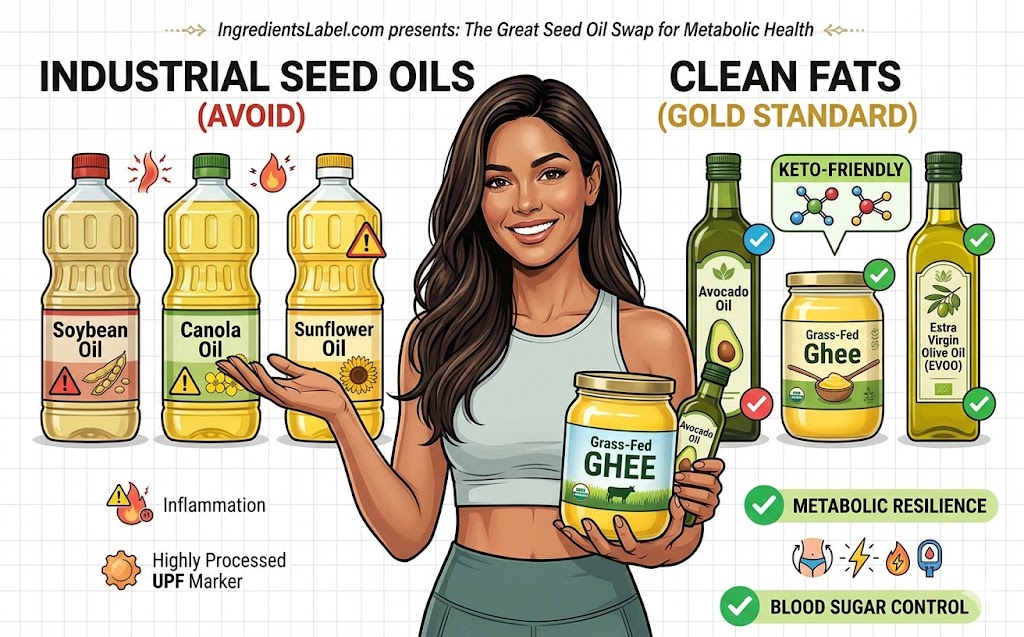
Even if a product says “0g trans fat,” check the ingredient list. If you see “partially hydrogenated oil,” the product may still contain trace amounts. These industrial fats raise LDL (bad) cholesterol and lower HDL (good) cholesterol. For a deep dive into how fats are classified on labels, see our guide on decoding clean fats on your 2026 nutrition label.
3. Carrageenan
A thickener derived from red seaweed, carrageenan is found in dairy products, non-dairy milks, and deli meats. Some research links degraded forms to gut inflammation, though it remains controversial. If you have inflammatory bowel conditions, it’s worth avoiding.
4. Sodium Nitrate / Sodium Nitrite
Common in processed meats like hot dogs, bacon, and deli cuts. While they extend shelf life and maintain color, high intake is associated with increased risk of colorectal cancer, according to the World Health Organization.
5. Maltodextrin
This white powder is used as a filler, thickener, or preservative in everything from protein powders to chips and salad dressings. It has a glycemic index higher than table sugar (around 110 vs. 65), making it a significant blood sugar trigger despite often appearing at the end of ingredient lists.
6. Artificial Colors (Red 40, Yellow 5, Blue 1)
Petroleum-derived synthetic dyes used in candies, cereals, and sports drinks. The EU requires warning labels on foods containing these dyes; the U.S. does not. Growing research links artificial colors to hyperactivity in children and potential carcinogenicity.
7. Monosodium Glutamate (MSG)
MSG is a flavor enhancer that makes food taste savory and rich. While the FDA considers it generally safe, many people report sensitivity reactions. It also hides under other names: hydrolyzed vegetable protein, autolyzed yeast extract, and “natural flavors” can all contain glutamate compounds.
8. Emulsifiers (Soy Lecithin, Polysorbate 80, Carboxymethylcellulose)
Emulsifiers keep oil and water mixed together — think peanut butter that doesn’t separate or salad dressing that stays uniform. Emerging research from 2026 suggests that certain emulsifiers may disrupt the gut microbiome and contribute to low-grade intestinal inflammation.
9. Artificial Sweeteners (Aspartame, Sucralose, Acesulfame-K)
Found in diet sodas, “sugar-free” products, and protein bars, these zero-calorie sweeteners were long considered safe alternatives to sugar. However, recent studies suggest they may alter gut bacteria, increase cravings, and paradoxically contribute to weight gain over time.
10. “Natural Flavors”
One of the most misunderstood hidden ingredients on any label. The FDA defines natural flavors as substances derived from plant or animal sources — but this umbrella term can legally cover hundreds of individual compounds including solvents, preservatives, and emulsifiers used in the extraction process. “Natural” does not always mean clean.
How to Read the Ingredient List Like a Pro
Knowing what to look for is half the battle. Here’s a practical, step-by-step guide to identifying hidden ingredients in any product:
Step 1: Check the Length
Ingredient lists that run longer than 2–3 lines are a red flag for heavy processing. Whole foods have one ingredient: themselves. The more items on the list, the more hidden ingredients you’re likely consuming.
Step 2: Read the First Three Ingredients
Ingredients are listed in descending order by weight. Whatever appears in the first three slots makes up the majority of what you’re eating. If sugar, refined flour, or oil top the list, the product is predominantly those things — regardless of what the front label says.
Step 3: Count the Sugar Aliases
Food manufacturers sometimes split sugar into multiple forms so each individual type ranks lower on the list, creating the illusion that the product is less sweet than it really is. Look for all of these:
- Cane sugar, brown sugar, turbinado sugar, powdered sugar
- Corn syrup, high-fructose corn syrup, rice syrup, malt syrup
- Honey, agave, molasses, fruit juice concentrate
- Any ingredient ending in “-ose”: glucose, fructose, dextrose, sucrose, maltose, lactose
Step 4: Look for the Kitchen Test
Ask yourself: “Would I use this ingredient in my own kitchen?” If the answer is no — if you’ve never bought carboxymethylcellulose, titanium dioxide, or BHA at the grocery store — that’s your signal you’re dealing with industrial hidden ingredients.
Step 5: Watch for Health Halos
Front-of-package claims like “low fat,” “vitamin-fortified,” “all-natural,” or “multigrain” are marketing language, not nutrition facts. Always flip the package over. In 2026, the FDA is advancing new front-of-package labeling rules that would require clear “high in” warnings for sodium, added sugars, and saturated fat — but until that’s fully implemented, the back label is your most reliable guide to spotting hidden ingredients.
The “Added Sugars” Line: The Most Important Update on the New Nutrition Facts Label
One of the most impactful changes to the U.S. Nutrition Facts label in recent years was the addition of a separate “Added Sugars” line beneath “Total Sugars.” This distinction matters enormously:
- Total Sugars = naturally occurring sugars (like those in milk or fruit) + added sugars
- Added Sugars = sugars poured in during manufacturing — one of the most common hidden ingredients by mass
A plain yogurt might have 12g of total sugar — all from naturally occurring lactose. A flavored yogurt might have 28g total, with 16g being added sugars. The Dietary Guidelines for Americans recommends keeping added sugars below 10% of total daily calories — about 50g on a 2,000-calorie diet. Most Americans consume roughly double that.
Quick tip: Divide grams of added sugar by 4 to get the teaspoon equivalent. 16g of added sugar = 4 teaspoons poured directly into your food.
Nutrients Worth Paying Attention To in 2026
Beyond the hidden ingredients list, these are the nutrients on the Nutrition Facts panel that matter most right now:
Dietary Fiber
The #1 nutrition trend of 2026 is fiber — and for good reason. Most Americans get less than half the recommended 25–38g per day. Fiber supports gut health, slows blood sugar spikes, and feeds beneficial gut bacteria. Look for products with at least 3–5g of fiber per serving.
Sodium
Processed foods are the #1 source of sodium in the American diet, accounting for over 70% of intake. The daily recommended limit is 2,300mg. A single serving of canned soup can contain 800–1,000mg. Reading sodium content is especially important for cardiovascular health.
Protein Quality
Protein is still king in 2026, but the trend is shifting toward “protein+” — products that combine high-quality protein with fiber, vitamins, or functional ingredients. Watch for protein sources: whole food proteins (chicken, lentils, Greek yogurt) are preferable to highly isolated sources like “hydrolyzed soy protein” or “pea protein isolate,” which are more processed.
Vitamin D and Potassium
These two nutrients are now required on the Nutrition Facts label because Americans are chronically deficient in them. Vitamin D deficiency is linked to immune dysfunction and bone loss; low potassium is associated with high blood pressure.
A 30-Second Label Check for Busy Shoppers
Short on time? Use this rapid-fire checklist before anything goes in your cart:
- Is the ingredient list short (under 5 ingredients)? ✅ Good sign.
- Are the first three ingredients whole foods? ✅ Good sign.
- Are added sugars under 6g per serving? ✅ Good sign.
- Is sodium under 400mg per serving? ✅ Good sign.
- Does it have at least 3g of fiber? ✅ Good sign.
- Does the ingredient list include hidden ingredients you can’t pronounce? ⚠️ Proceed with caution.
Frequently Asked Questions About Hidden Ingredients
What are hidden ingredients in food?
Hidden ingredients in food are additives, preservatives, emulsifiers, artificial colors, and flavor compounds that manufacturers include in ultra-processed products but that aren’t obvious from the front of the package. Common examples include carrageenan, maltodextrin, polysorbate 80, and “natural flavors” — which can legally represent hundreds of individual chemical compounds.
How do I identify hidden ingredients on a nutrition label?
To identify hidden ingredients, always read the full ingredient list on the back of the package — not just the nutrition facts panel. Look for ingredients with chemical-sounding names, multiple forms of sugar, and anything you wouldn’t find in a home kitchen. A list longer than 5–7 ingredients is typically a sign of heavy processing.
Are hidden ingredients in ultra-processed foods dangerous?
Some hidden ingredients have been linked to health concerns including gut inflammation (carrageenan, certain emulsifiers), metabolic disruption (HFCS, artificial sweeteners), and increased cancer risk (sodium nitrite). That said, risk depends on quantity and individual sensitivity. The goal is awareness — not panic — and making more informed choices over time.
What is the most common hidden ingredient to avoid?
High-fructose corn syrup (HFCS) and “natural flavors” are among the most common hidden ingredients in packaged foods. HFCS appears in thousands of products and is linked to obesity and metabolic syndrome. “Natural flavors” is a catch-all term that can hide dozens of compounds including MSG-related substances and chemical solvents.
How can I avoid hidden ingredients when grocery shopping?
The best strategies to avoid hidden ingredients include: choosing products with fewer than 5 ingredients, buying whole or minimally processed foods, using apps like the EWG Food Scores database to check specific products, and applying the “kitchen test” — if you wouldn’t cook with it, think twice about eating it.
The Bottom Line
Your nutrition label is more than a regulatory requirement — it’s a roadmap to identifying hidden ingredients before they reach your plate. In an era where over 60% of the calories in the average American diet come from ultra-processed foods, the ability to read and interpret an ingredient list is a genuine superpower. The goal isn’t perfection; it’s awareness. The more you practice the kitchen test, scan for sugar aliases, and check fiber and sodium, the more automatic good choices become.
Your food should be made of ingredients, not manufactured in a lab. And now, you have the tools to tell the difference.